Leaking windows are more than just an annoying drip. They’re silently driving up your energy bills and putting your home at risk. For Maryland, Virginia, and DC homeowners, where weather extremes range from humid summers to harsh winter storms, window leaks can lead to serious problems like mold growth, water damage, and uncomfortable living spaces.
Understanding why your windows are leaking and knowing when to repair versus replace can save you thousands in energy costs and prevent costly home damage. This guide explains the common causes of window leaks, practical solutions, and when it’s time to consider custom-manufactured replacement windows built specifically for Mid-Atlantic climate challenges.
What Causes Window Leaks?
1. Deteriorating Window Seals and Caulking
The most common cause of leaking windows is worn-out or damaged sealant. Over time, the caulking around your window frames breaks down due to constant exposure to temperature fluctuations, UV rays, and moisture. You’ll notice telltale signs like:
- Flaking or peeling caulk around window edges
- Discolored or cracked sealant
- Condensation forming between window panes
- Visible gaps between the window frame and wall
Mid-Atlantic homeowners face especially harsh conditions. Freezing winters cause caulk to contract, while humid summers make it expand. This constant cycle accelerates seal degradation faster than in more temperate climates.
2. Failed Window Locking Systems
A window that doesn’t close properly won’t seal correctly, creating gaps where water can enter. Locking system issues include:
- Difficulty latching or locking windows fully
- Damaged or worn hardware components
- Warped window frames preventing proper closure
- Broken or missing locking mechanisms
Even a slightly misaligned window can allow rainwater to seep through during Mid-Atlantic storms.
3. Poor Installation or Damaged Flashing
The flashing around your windows directs water away from the opening. When flashing is incorrectly installed, damaged, or missing entirely, water infiltrates the wall cavity. This often happens when:
- Windows were improperly installed initially
- Exterior siding or trim work damaged the flashing
- Age and weather have corroded metal flashing components
- Hurricane or storm damage compromised the seal
According to ENERGY STAR®, proper installation is critical for window performance, affecting both energy efficiency and weather resistance.
4. Clogged or Damaged Weep Holes
Modern windows include small weep holes designed to channel condensation and minor water infiltration safely outside. When these become clogged with dirt, debris, or paint, water backs up and leaks into your home.
5. Aging Windows Past Their Lifespan
Most windows experience seal failures and frame deterioration over time. If your windows are older and showing multiple problems simultaneously, repairs become a temporary solution at best.
How to Identify Window Leaks in Your Home
Before fixing the problem, you need to pinpoint where water is entering. Here’s a simple diagnostic test:
The Hose Test: On a dry day, have someone spray water from a hose along the exterior edges of your window while you observe from inside. Watch for moisture appearing around:
- Window sills and tracks
- Frame edges and corners
- Between window panes (indicates seal failure)
- Wall areas adjacent to the window
Start with light water pressure at the bottom and gradually work upward. This methodical approach helps identify exactly where weatherstripping, caulking, or structural issues exist.
Visual Inspection Signs:
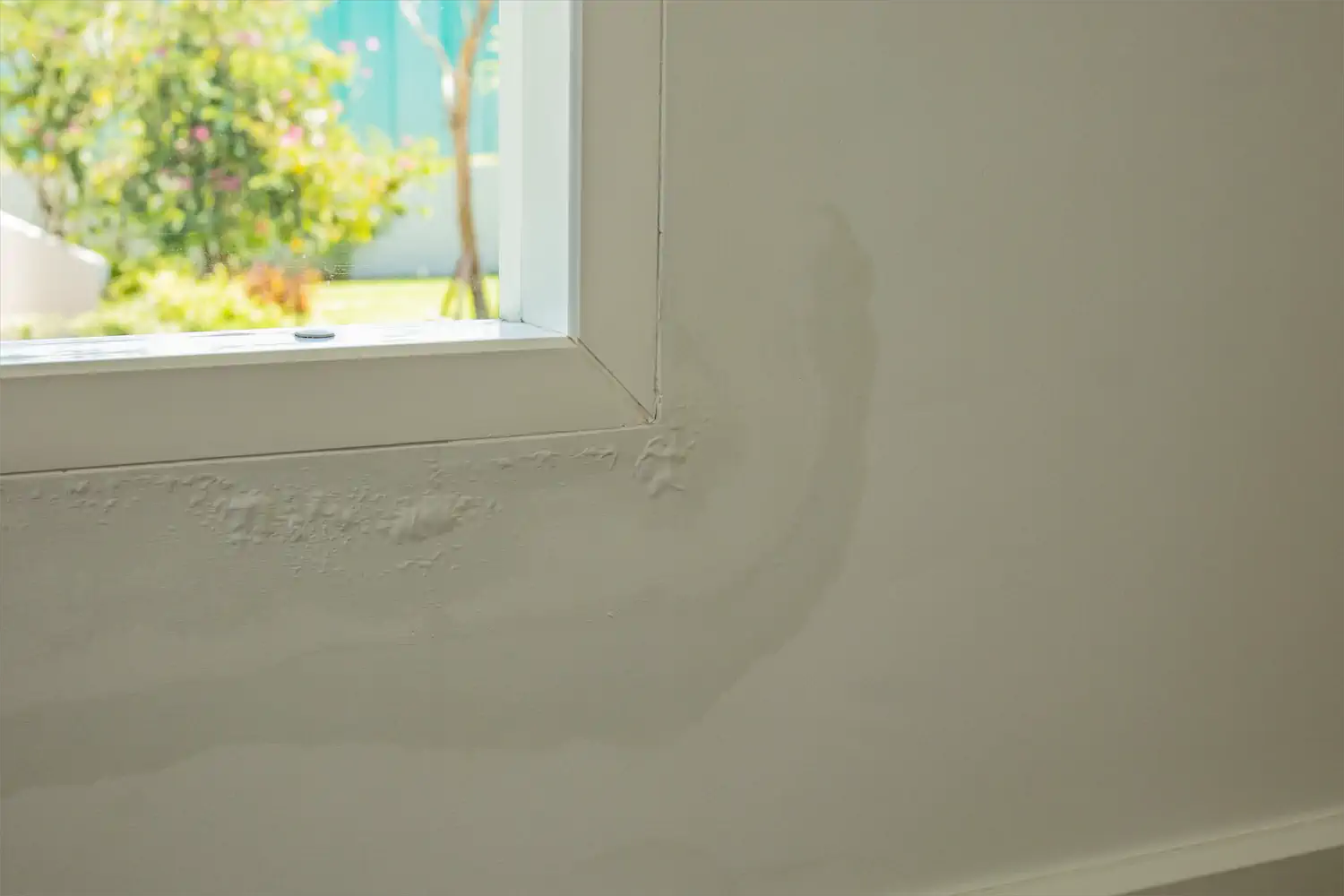
- Water stains on walls or ceilings near windows
- Peeling paint or wallpaper
- Mold or mildew growth
- Musty odors near windows
- Warped window frames or sills
- Condensation between double-pane windows
DIY Solutions for Minor Window Leaks
Recaulking Windows
For leaking windows caused by damaged sealant, recaulking is a cost-effective DIY solution if done correctly.
Materials needed:
- Caulk removal tool or utility knife
- High-quality exterior window caulk (silicone or polyurethane)
- Caulking gun
- Clean rags and rubbing alcohol
Step-by-step process:
- Choose the right day: Work on a dry day when temperatures are above 50°F for proper caulk adhesion
- Remove old caulking: Carefully strip all deteriorated caulk using a removal tool, being careful not to damage the window frame
- Clean thoroughly: Wipe surfaces with rubbing alcohol to remove residue, dirt, and moisture
- Apply new caulk: Use smooth, continuous strokes to create even beads along all joints
- Tool the caulk: Within 5 to 10 minutes, use a wet finger or tool to smooth and press the caulk into gaps
- Allow proper curing: Follow manufacturer’s instructions (typically 24 to 48 hours) before exposing to moisture
Pro tip: For Mid-Atlantic climates, choose caulk rated for extreme temperature ranges (negative 40°F to 180°F) to withstand our harsh winters and hot summers.
Replacing Weatherstripping
Worn weatherstripping creates gaps where water and air infiltrate. Replacement is straightforward:
- Remove old weatherstripping completely
- Clean the channel thoroughly
- Measure and cut new weatherstripping to fit
- Press or nail into place (depending on type)
- Test window operation to ensure proper seal
For double-hung windows, pay special attention to the sash meeting rail where the two window sections come together.
Clearing Weep Holes
Use a thin wire, compressed air, or a small brush to carefully clear debris from weep holes. Never seal or permanently block these drainage channels. They’re essential for preventing water buildup.
When DIY Repairs Aren’t Enough
Some window leak situations require professional intervention or complete replacement:
Structural Damage
If water has infiltrated the wall cavity, you may have rotted framing, insulation damage, or mold growth that demands professional remediation before addressing the window itself.
Multiple Seal Failures
When condensation appears between double-pane glass, the sealed unit has failed. This can’t be repaired. The entire window sash needs replacement.
Recurring Leaks After Repairs
If you’ve recaulked and the leaks continue, the problem likely stems from improper installation, damaged flashing, or a warped frame. These issues require professional diagnosis.
Windows Showing Age-Related Failures
Older windows often have multiple failing components simultaneously. At this point, the most cost-effective solution is replacement rather than ongoing repairs.
According to ENERGY STAR®, replacing old windows with ENERGY STAR certified models can save approximately 12% on energy costs annually, which can total $200 to $600 in savings each year.
The Replacement Solution: Custom Windows for Mid-Atlantic Homes
When repairs won’t cut it, replacement windows offer a permanent solution that improves comfort, efficiency, and home value. For Mid-Atlantic homeowners facing temperature extremes from 0°F winters to 95°F+ summers, plus hurricane threats and heavy precipitation, custom-manufactured windows provide superior protection.
Benefits of Replacement Windows
Energy Efficiency: Modern ENERGY STAR® certified replacement windows feature Low-E glass coatings, argon gas fills, and advanced framing materials that dramatically reduce heat transfer. This means:
- Lower heating bills in winter
- Reduced cooling costs in summer
- More consistent indoor temperatures
- Decreased HVAC system strain
Weather Resistance: Quality replacement windows are tested to withstand extreme conditions. Look for windows rated for:
- Wind resistance appropriate for your climate zone
- Impact resistance for storm protection
- Superior water infiltration resistance
- Thermal performance across extreme temperature ranges
Customization: Unlike stock windows, custom-manufactured options are built to your exact opening dimensions, ensuring:
- Perfect fit that eliminates gaps and air leaks
- Optimized performance for your specific climate zone
- Architectural styles that enhance curb appeal
- Grid patterns and finishes matching your home’s design
Long-Term Value: Professional installation of quality windows includes:
- Comprehensive warranties (look for 50-year coverage)
- Proper flashing and weatherproofing
- Insulation and air sealing
- Manufacturer accountability for both product and installation
Why Choose Thompson Creek for Window Replacement
For over 40 years, Thompson Creek has specialized in manufacturing custom windows specifically designed for Mid-Atlantic weather challenges. Our 70,000-square-foot Maryland facility produces every window to exact specifications for your home. No stock sizes, no compromises.
Our custom-manufactured windows feature:
- ENERGY STAR® certification exceeding 2022 criteria for maximum efficiency
- Testing confirming superior wind resistance for storm protection
- Low-E glass and argon gas fills for superior insulation
- Weather-resistant vinyl construction requiring zero maintenance
- Custom sizing for perfect fit in any opening
Complete accountability from one company:
- Design consultation at your home
- Manufacturing in our Maryland facility
- Professional installation by factory-trained crews
- 50-year No-Hassle Warranty covering product and installation
- Local service and support throughout product lifetime
Unlike multi-vendor approaches where you deal with separate manufacturers, distributors, and installers, Thompson Creek provides single-source responsibility. If an issue arises, whether during installation or 20 years later, you have one company to call.
Frequently Asked Questions About Leaking Windows
Can I repair a leaking window myself?
Yes, minor leaks caused by deteriorated caulking or worn weatherstripping can often be repaired as DIY projects. You’ll need quality exterior caulk, basic tools, and good weather conditions. However, leaks caused by structural damage, failed window seals, or improper installation require professional assessment and typically window replacement.
How do I know if my window leak is serious?
Serious warning signs include water stains on walls or ceilings, mold growth, condensation between double-pane glass, warped frames, and recurring leaks after repair attempts. These indicate problems beyond surface weatherproofing that require professional attention to prevent further home damage.
What’s the best caulk for sealing windows in Maryland/Virginia weather?
Choose high-quality silicone or polyurethane caulk rated for extreme temperatures (negative 40°F to 180°F minimum). The caulk should be labeled for exterior use and specifically designed for windows. Mid-Atlantic weather extremes require caulk that remains flexible through freeze-thaw cycles and humid summers.
How much does it cost to repair a leaking window?
DIY caulking repairs cost $10 to $30 in materials. Professional caulking services cost $30 to $100 per window (average $50 to $70), while complete weatherproofing projects run $200 to $500 for typical homes. However, if the leak stems from failed seals, damaged flashing, or structural issues, window replacement ($300 to $1,000+ per window installed) often provides better long-term value than ongoing repairs.
Can leaking windows cause mold?
Yes, persistent moisture from leaking windows creates ideal conditions for mold growth in walls, window frames, and surrounding areas. Mold poses health risks and requires professional remediation. Addressing window leaks promptly prevents costly mold problems.
How often should I recaulk my windows?
Inspect window caulking annually and recaulk approximately every 3 to 5 years as preventive maintenance. In Mid-Atlantic climates with harsh weather, caulk may deteriorate faster. Replace caulk immediately when you notice cracking, peeling, or gaps.
Will new windows stop leaking completely?
Quality replacement windows professionally installed with proper flashing, weatherproofing, and sealing should not leak under normal conditions. Thompson Creek’s 50-year No-Hassle Warranty covers both products and installation, providing protection against leaks and other failures.
What happens if I ignore leaking windows?
Ignoring window leaks leads to progressively worse problems: higher energy bills, water damage to walls and framing, mold growth, decreased home value, and potential structural damage. Early repair costs far less than addressing extensive water damage later.
Do I need to replace all my windows if only one is leaking?
Not necessarily. If other windows are functioning well and relatively new, you can replace individual leaking windows. However, if your windows are old and showing wear, replacing all windows simultaneously often provides better value and consistent energy efficiency throughout your home.
Can window leaks affect my home’s energy efficiency?
Absolutely. Leaking windows allow conditioned air to escape and outdoor air to enter, forcing your HVAC system to work harder. ENERGY STAR® estimates that replacing old single-pane windows can save 6% to 13% annually on utility bills, typically $125 to $340 per year according to official ENERGY STAR data, with potential savings up to $583 for Mid-Atlantic homes.
Protecting Your Mid-Atlantic Home from Window Leaks
Leaking windows won’t fix themselves, and temporary repairs often lead to bigger problems down the road. Whether you tackle DIY caulking for minor issues or invest in custom replacement windows for permanent solutions, addressing window leaks protects your home’s comfort, efficiency, and structural integrity.
For Maryland, Virginia, DC, Pennsylvania, and North Carolina homeowners, the unique climate demands windows engineered specifically for extreme weather. Thompson Creek’s custom-manufactured windows are built in Maryland for Mid-Atlantic homes, combining superior energy efficiency with hurricane-grade durability and backed by the industry’s best warranty.
Ready to stop worrying about leaking windows? Schedule your free in-home consultation today. Our window experts will assess your specific situation, explain your options, and provide a detailed quote with no pressure. Just honest advice from a family-owned company that’s served the Mid-Atlantic since 1980. Our custom windows come with a 50-year No-Hassle Warranty and professional installation you can count on.
Related Resources
Learn more about window maintenance and replacement:
- When to Replace Windows: Signs and Tips
- Common Home Window Problems
- What to Do With a Broken Window
- Benefits of Energy-Efficient Windows
- Maryland Window Tax Credits & Rebates
Serving Maryland, Virginia, Washington DC, Pennsylvania, and North Carolina with custom-manufactured windows, doors, siding, and roofing since 1980.