Spring brings warmer weather and the perfect opportunity to refresh your home’s windows and screens. Properly maintained window screens not only improve your home’s appearance but also enhance energy efficiency, block harmful UV rays, and keep pests out. Whether you have vinyl replacement windows or traditional double-hung windows, following this comprehensive window and door frame cleaning tips guide will help extend the life of your screens while improving indoor comfort.
Regular window screen cleaning and maintenance is especially important for Mid-Atlantic homeowners who experience harsh winters, humid summers, and seasonal pollen. Clean screens allow maximum airflow while protecting your home from insects, reducing the need for air conditioning and lowering energy bills.
Benefits of Spring Window Screen Reinstallation
Reinstalling your window screens after winter storage offers several important benefits for your home. Clean, properly installed screens can block about 30-40% of solar heat that would otherwise enter your rooms, reducing cooling costs during Maryland and Virginia’s hot summer months. Screens also provide natural ventilation, allowing you to enjoy fresh air without compromising home security or inviting unwanted pests inside.
For homeowners with energy efficient windows, maintaining screens ensures you’re maximizing your investment in home comfort. Damaged or missing screens force you to keep windows closed, eliminating the benefits of natural ventilation and increasing reliance on HVAC systems.
How to Clean Window Screens: Step-by-Step Process
Remove Screens Carefully
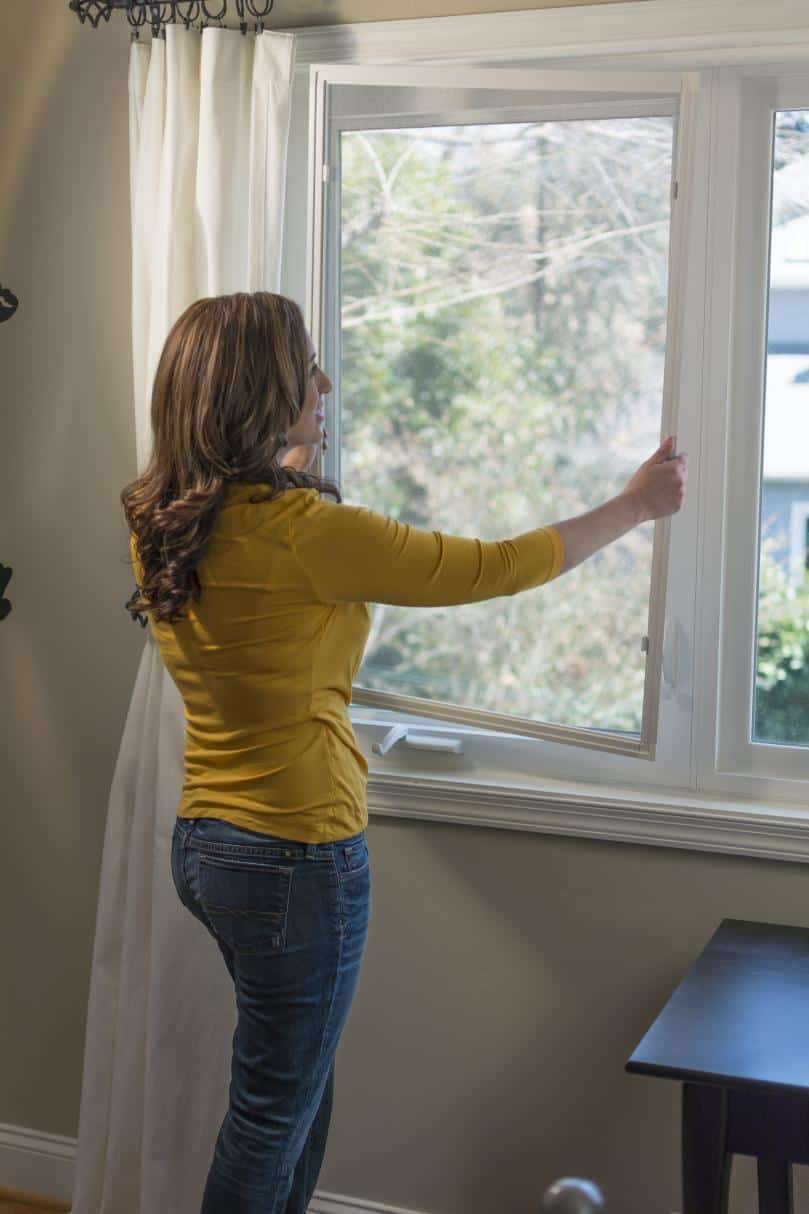
Most window screens mount on the exterior side of the window, including double hung windows and slider windows. Look for rectangular or square lift tabs typically located toward the bottom of the screen frame. Gently compress these tabs while carefully pulling the screen away from the window frame. Handle screens with care to avoid warping the frame, which can create gaps that allow insects to enter your home.
For second-story windows, always prioritize safety. Consider hiring professional window installation experts if you’re uncomfortable working at heights.
Initial Debris Removal
If you stored your screens in the garage or basement during winter, they may have accumulated dust, cobwebs, and debris. Start by using a soft-bristle brush or vacuum with a brush attachment to remove loose dirt, pollen, and spider webs from both sides of the screen mesh. This dry cleaning step prevents turning dust into muddy streaks during the wet cleaning phase.
Deep Cleaning Method
Take screens outdoors to your yard or driveway for thorough cleaning. Create a gentle cleaning solution using warm water mixed with a few drops of mild dish soap or a 50/50 mixture of white vinegar and water. Using a soft sponge or soft-bristle brush, gently scrub both sides of the screen in circular motions. Avoid using excessive pressure that could tear the mesh or bend the frame. For detailed how to clean window screens step-by-step instructions, see our comprehensive guide.
For stubborn grime or areas with hard water stains, let the soap solution sit for 2-3 minutes before scrubbing. Never use abrasive cleaners, steel wool, or stiff brushes that can damage screen materials.
Proper Rinsing and Drying
After scrubbing, rinse screens thoroughly with a garden hose using low water pressure. High-pressure water or pressure washers can damage screen mesh and bend aluminum frames. Rinse both sides until all soap residue is removed and water runs clear.
Lean screens against a fence or wall in a sunny, well-ventilated area to air dry completely. Direct sunlight helps eliminate any remaining moisture that could promote mildew growth. Allow at least 2-3 hours of drying time before reinstallation.
Inspecting Screens for Damage
While cleaning, carefully inspect each screen for signs of damage that could compromise performance. Look for small tears or holes in the mesh that allow insects to enter. Check aluminum or vinyl frames for bends, warping, or corrosion. Examine the spline (rubber gasket that holds mesh in the frame) for cracking or deterioration.
Minor tears smaller than a quarter-inch can often be repaired with clear nail polish or screen repair patches available at hardware stores. Larger tears, severely bent frames, or deteriorated splines typically require professional screen replacement to maintain proper function.
Warped frames are particularly problematic because they prevent screens from seating properly in window frames, leaving gaps that invite pests and reduce energy efficiency. If frames are warped beyond minor adjustments, replacement is the most effective solution.
Screen Reinstallation Best Practices
Once screens are completely dry and any repairs are completed, reinstall them following the reverse of the removal process. Take your screen and align it with the window opening, sliding the top edge into the upper portion of the window channel. Then compress the lift tabs at the bottom while working the screen into position in the window frame.
Release the tabs slowly to engage the tension springs that hold the screen in place. The screen should fit snugly without gaps around the perimeter. Test the fit by gently pressing the center of the screen; it should have slight give but remain firmly seated in all four corners.
Window Frame Inspection During Screen Maintenance
Spring screen maintenance provides an excellent opportunity to inspect your window frames for winter damage. While you have screens removed and windows easily accessible, look for signs of water infiltration, loose or missing weatherstripping, or deterioration of the window frame itself.
Check for peeling paint, rotting wood (on older windows), or gaps that could allow air leakage. If you notice condensation between glass panes, faulty locks, or difficulty opening and closing windows, these issues indicate it may be time to consider replacement windows that offer better energy efficiency and easier maintenance.
Thompson Creek’s vinyl replacement windows come with durable screens designed for Mid-Atlantic weather conditions and include our 50-year No-Hassle Warranty, eliminating concerns about screen replacement costs for decades.
Seasonal Window Screen Maintenance Schedule
Spring (March-May)
- Remove screens from winter storage
- Deep clean with soap and water
- Inspect for damage and make repairs
- Reinstall for summer ventilation
- Clean window glass and frames
Summer (June-August)
- Quick dust removal monthly with soft brush
- Hose down if pollen accumulation is heavy
- Check for pest damage from insects
- Ensure screens remain properly seated
Fall (September-November)
- Final deep clean before winter storage
- Inspect and repair any damage
- Consider leaving screens in place in mild climates
- Remove and store in harsh winter areas
Winter (December-February)
- Store screens in dry, protected location
- Stack screens with cardboard between to prevent scratching
- Check storage area for moisture that could cause mildew
- Plan for spring cleaning and maintenance
Material-Specific Screen Care Tips
Fiberglass Screens
Fiberglass mesh is the most common screen material due to its affordability and rust resistance. Clean gently with soft brushes as fiberglass can tear more easily than metal screens. Avoid direct heat sources during drying, as extreme heat can warp fiberglass mesh.
Aluminum Screens
Aluminum screens are more durable than fiberglass but can corrode in coastal areas with salt air. Use vinegar-based solutions to remove corrosion spots. Check for sharp edges on damaged aluminum that could cause injury.
Pet-Resistant Screens
Heavy-duty pet screens require the same cleaning process but can withstand slightly more aggressive scrubbing. Inspect pet screen areas where animals frequently contact the mesh for signs of stretching or separation from the frame.
Preventing Future Screen Damage
Beyond regular cleaning, several preventive measures help extend screen life and reduce maintenance needs:
Trim nearby vegetation: Tree branches and shrubs that touch screens can cause tears and accelerate debris accumulation. Maintain at least 12 inches of clearance between plants and window screens.
Control moisture: Excessive moisture promotes mildew growth on screens and frames. Ensure proper drainage around windows and gutters to prevent water from constantly splashing on screens.
Educate household members: Teach children and visitors not to lean on, push, or cut screens. Install window guards for upper-story windows if young children are present.
Address pest issues promptly: If you notice insects chewing through screens, identify and eliminate the pest source quickly to prevent extensive damage.
When to Replace Window Screens
Despite regular maintenance, window screens eventually require replacement. Replace screens when you notice extensive tears covering more than 25% of the mesh area, severely bent or corroded frames that cannot be straightened, deteriorated splines that no longer hold mesh securely, or persistent mildew that returns despite cleaning. Learn more about common window repair issues to watch for.
Upgrading to custom-manufactured replacement windows with factory-installed screens often provides better long-term value than repeatedly repairing aging screens on older windows. Modern replacement windows feature screens specifically designed to fit perfectly, resist damage, and require minimal maintenance.
FAQ: Window Screen Maintenance
How often should you clean window screens?
Deep clean screens twice yearly in spring and fall. In dusty or high-pollen areas like the Mid-Atlantic region, monthly light cleaning with a soft brush helps maintain airflow and visibility.
Can you clean window screens without removing them?
Yes, for light cleaning. Use a lint roller or soft brush to remove loose dust and pollen. For deep cleaning, removal is necessary to properly scrub both sides and inspect for damage.
What’s the best way to remove hard water stains from window screens?
Mix equal parts white vinegar and water. Apply with a soft sponge, let sit for 5 minutes, then gently scrub and rinse thoroughly with low-pressure water.
Should window screens be removed for winter?
In areas with heavy snow and ice, removing screens prevents damage from snow buildup and allows installation of storm windows. In mild Mid-Atlantic winters, screens can remain in place year-round if properly maintained.
How do you fix small holes in window screens?
For holes smaller than 1/4 inch, apply clear nail polish or use self-adhesive screen repair patches. Larger holes require professional screen replacement or re-meshing for best results.
What tools do I need for window screen maintenance?
Essential tools include a soft-bristle brush, garden hose, mild dish soap or white vinegar, soft sponge, bucket, and a clean, dry cloth. Optional tools include a vacuum with brush attachment and screen repair patches.
How do you prevent window screens from warping?
Handle screens gently during removal and cleaning. Never apply excessive force when scrubbing. Store screens flat or properly supported vertically. Avoid leaving screens in direct sunlight for extended periods during storage.
Why Choose Thompson Creek for Your Window and Screen Needs
Since 1980, Thompson Creek has been manufacturing custom-designed replacement windows in our 70,000 square foot Maryland facility. Our ENERGY STAR® certified windows come with integrated screens engineered to withstand Mid-Atlantic weather extremes, including winds up to 146 mph. Every window includes our industry-leading 50-year No-Hassle Warranty covering both the window and screen components.
When you choose Thompson Creek, you work with one company from design through professional installation and lifetime warranty service—complete accountability you can trust. Our locally manufactured windows mean faster installation timelines and immediate warranty support when you need it.
Ready to upgrade to maintenance-free vinyl replacement windows? Schedule your free in-home consultation today and discover why Mid-Atlantic homeowners have trusted Thompson Creek for over 40 years. Our custom-manufactured windows and professional installation come with unmatched warranty protection you can count on.
Schedule Your Free Consultation | Explore Our Window Options